DEVS Unified Process a.k.a DUNIP
Service Oriented Architectures (SOA) present challenges to current model-based software engineering methodologies such as Rational Unified Process (RUP). In this effort, originally developed by Dr. Mittal in his doctoral research, a process called DEVS Unified Process (DUNIP) has been proposed. It uses the Discrete Event Systems Specification (DEVS) formalism as a basis for automated generation of models from various requirement specifications and their eventual realization as SOA collaborative services.
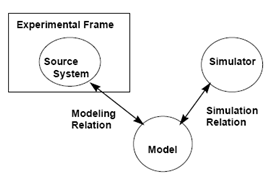
Figure 1:DEVS Elements
DEVS is inherently based on object oriented methodology and systems theory, and categorically separates the Model, the Simulator and the Experimental frame (Figure 1), and has been used for systems Modeling & Simulation for over 30 years. Till date there has not come up any other discrete event theory to refute DEVS that was pioneered by Dr. Bernard Zeigler in early 70's.
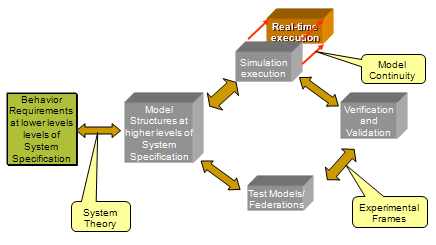 Figure 2:Bifurcated Model Continuity-based Life Cycle Process
DUNIP integrates various model-based engineering concepts into DEVS-based Bifurcated Model-Continuity life-cycle development methodology as in Figure 2 above. The life-cycle begins by specifying the system requirements in a number of different formats such as state-based, BPMN/BPEL-based, message-based requirement specifications. DUNIP then automates the generation of DEVS models capable for distributed collaboration. The collaboration uses an XML-based DEVS Modeling Language (DEVSML) framework that provides the capability to integrate models that may be expressed in different DEVS implementation languages. The models are also made available for remote and distributed real-time execution over the SOA middleware in a manner transparent to the user (Figure 3). A prototype simulation framework known as DEVS/SOA was implemented.
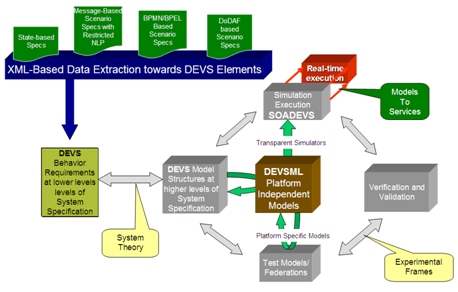 Figure 3:DEVS Unified Process
In the dissertation, the entire process is illustrated with an application to a system of collaborating military systems implemented and tested using Bifurcated Model-Continuity methodology. The research also illustrates how the Department of Defense Architecture Framework (DoDAF) can be enhanced to incorporate simulation based executable models using the DUNIP process.
Dissertation
Overview (.ppt)
DEVS Unified Process for Integrated Development and Testing of Service Oriented Architectures (.pdf)
Table of Contents (.pdf)
Prototype Demonstration movie (.avi 200MB)